


The average shopper plans to spend $486 across the 2026 pre-holiday sales (Black Friday, Cyber Monday and Singles Day), according to a Finder survey of 1,000 U.S. adults between 18 and 64 years old.
The median hourly wage across all U.S. jobs is $24.51, according to the Bureau of Labor Statistics. At that rate, it takes about 20 hours of work to earn a $486 Black Friday budget before taxes, half a 40-hour workweek.
For the cashiers ringing up those deals, it’s closer to 31 hours of work.
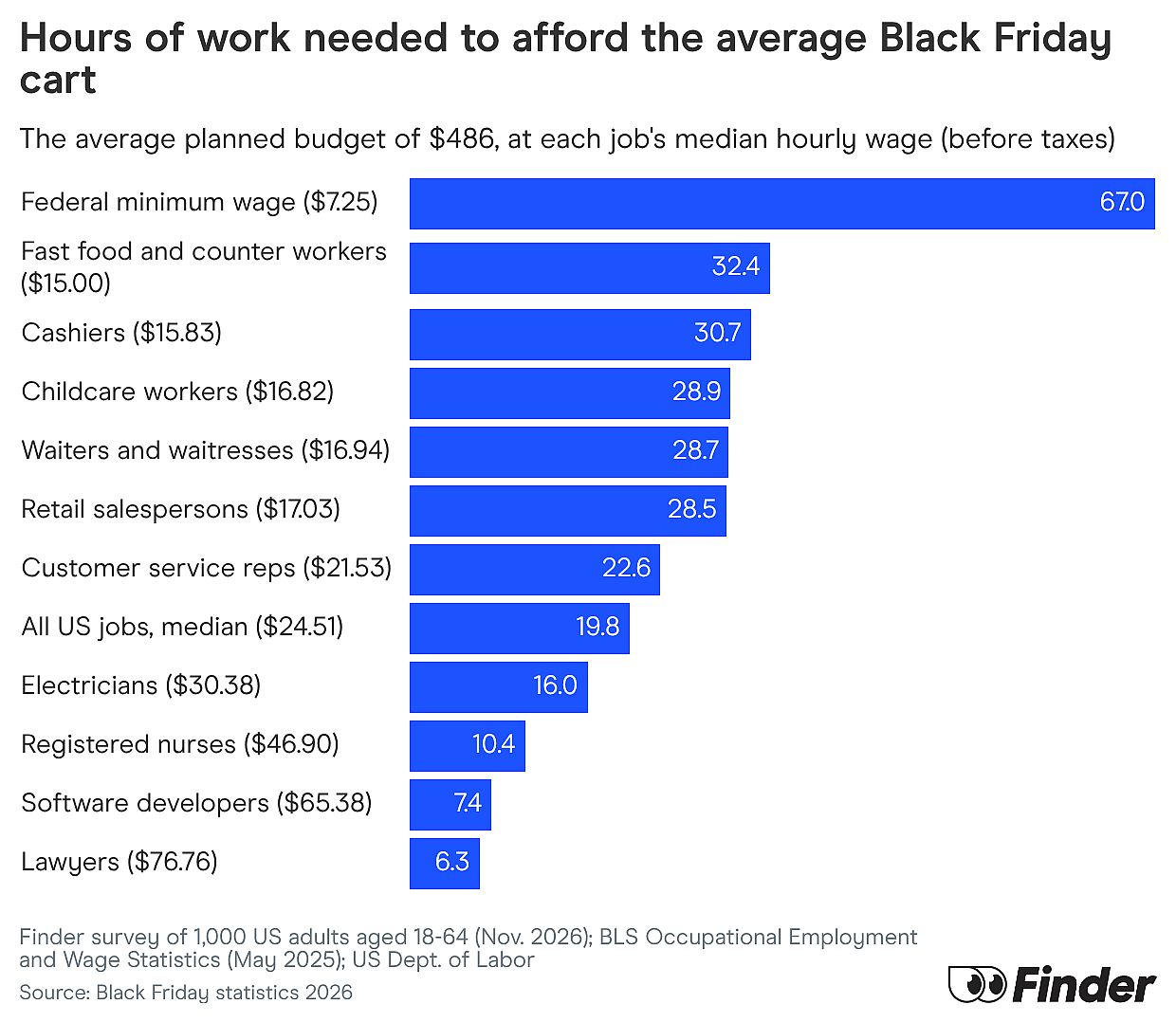
Here’s how many hours of work it takes to cover the average $486 Black Friday budget, before taxes:
How long it takes to earn the average $486 budget depends a lot on what you do for a living.
In short, food, retail and care jobs sit at the top of the list. Fast food and counter workers need 32.4 hours, while childcare workers, waiters and retail salespeople all need between 28 and 29 hours. Registered nurses cover the same cart in about 10 hours, and software developers in about seven.
Here’s the math at the median hourly wage for 10 common jobs, plus the median for all U.S. jobs and the federal minimum wage:
Not everyone plans to spend $486. Finder’s survey found the median shopper plans to spend $300, while shoppers in households earning more than $100,000 plan to spend $660 on average. Here’s how many hours of work each budget takes in eight of the jobs below:
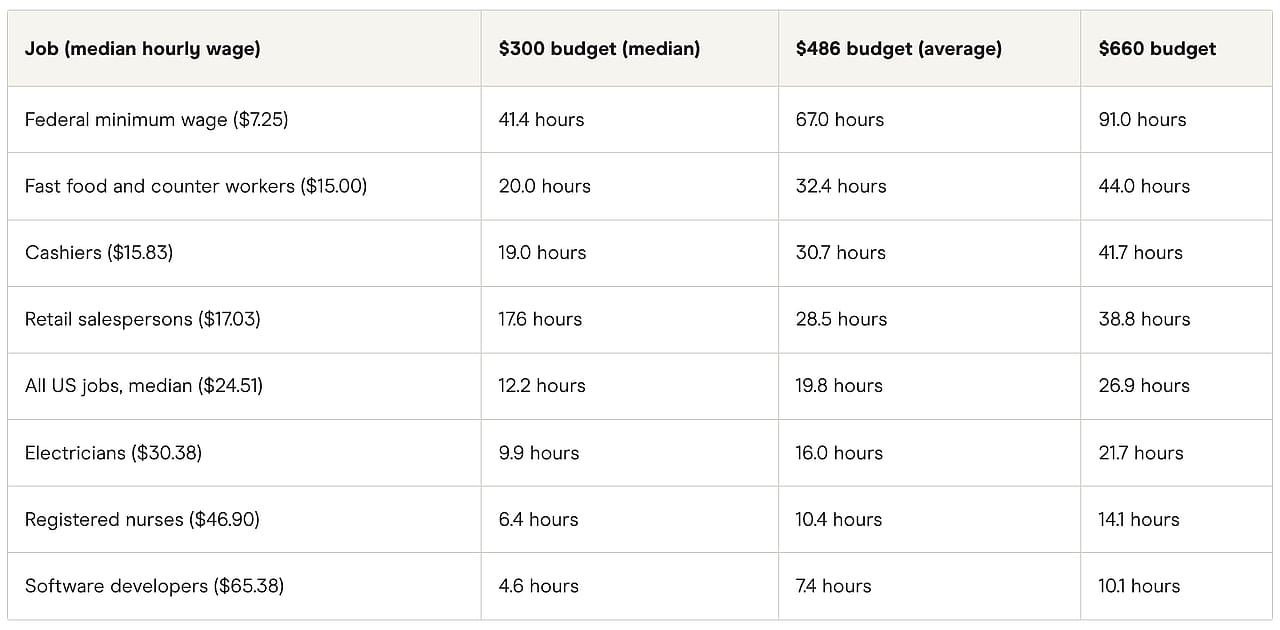
Many states set their own minimum wage above $7.25, so minimum-wage workers in those states need fewer hours, according to the Department of Labor.
Planned budgets also vary by who’s shopping. Here’s each group’s average planned spend, converted into hours at the median U.S. wage of $24.51. Pay varies a lot from person to person, so this shows how big each group’s cart is in work time, not how long that group actually works:
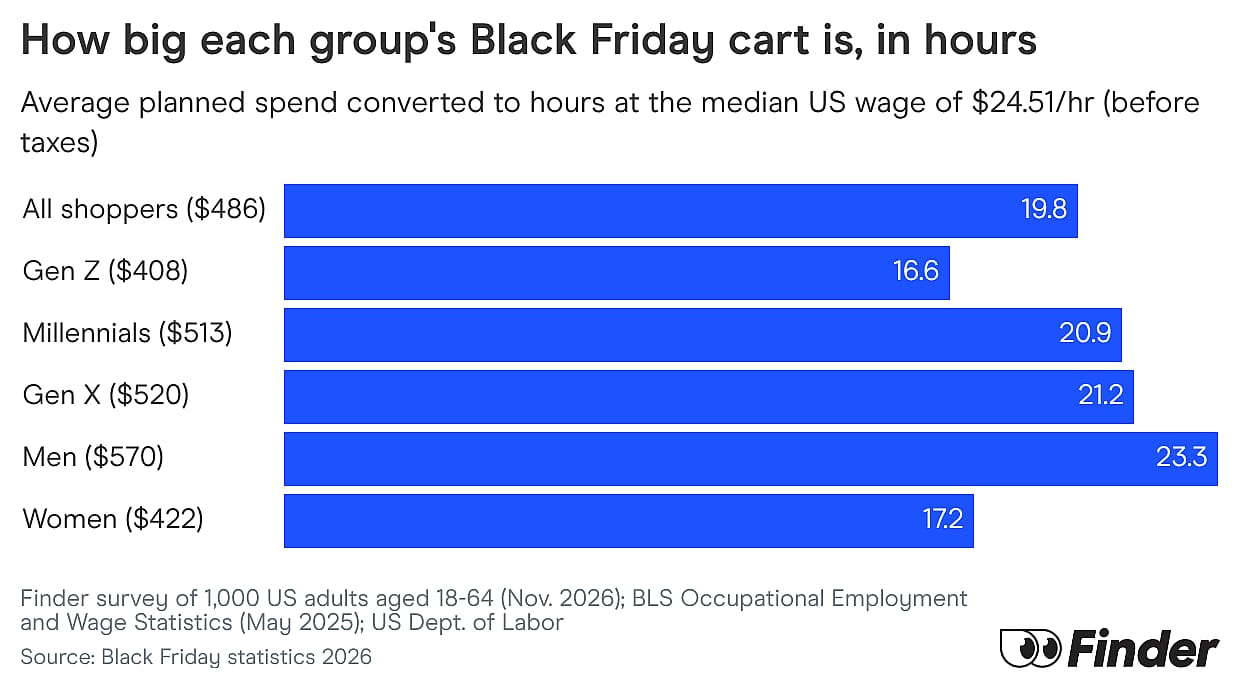
Men plan the biggest carts, at about 23 hours of work at the median wage — about six hours more than women (17.2 hours). Gen X (21.2 hours) and millennials (20.9 hours) are close behind, while Gen Z plans the smallest cart of the three generations, at 16.6 hours.
More than half (55%) of people planning to shop the sales have bought something on sale that they later regretted, according to Finder’s survey. Apparel and footwear (40%) and electronics (39%) are the most regretted buys.
Some shoppers doubt the deals themselves. One in five adults (20%) believe retailers inflate prices and then discount them.
If you’d rather not dip into your regular paycheck, a few side gigs can chip away at the total. Pay, availability and eligibility vary, so treat these as starting points:
The average $486 Black Friday cart costs the typical U.S. worker about 20 hours of work before taxes, and a cashier closer to 31. With most sale shoppers saying they’ve regretted at least one purchase, it’s worth checking the price in hours, not just dollars.
Before you hit ”buy now,” ask yourself how many hours of work you’d trade for this. If the honest answer is “not many,” leave it in the cart.
Spending figures come from a survey Finder commissioned from Pollfish of 1,000 U.S. adults aged 18 to 64 on Nov. 5, 2026. Results are unweighted, and averages exclude $0 answers and answers above $10,000. Hours are calculated by dividing each budget by each hourly wage. Job wages are national median hourly wages from the Bureau of Labor Statistics’ Occupational Employment and Wage Statistics for May 2025, published May 15, 2026. These are employer-reported wages and don’t include the self-employed.
All hours in this article use gross pay before taxes, so the take-home cost in hours is higher. Wages are national medians, so pay in your area may be higher or lower. Side-gig platforms don’t guarantee work, and contractors typically handle their own taxes. Platform pay rates come from each platform’s website and can change.
This guide has been edited by Bethany Hickey.
This story was produced by Finder and reviewed and distributed by Stacker.


